Let them Eat Poverty Reports
by C.A. L'Hirondelle, June 2010
I had a bad dream the other night. There was an earthquake. I was determined I had to get to the seventh floor, of an older building, in an elevator. This possibly had to do with the somewhat mysterious aura of the 7th floor of the Central Building at 620 View Street (downtown Victoria-BC), former home of many social justice groups.

This address is etched in my brain from all the time I spent there. The tiny, vintage elevators would shudder and shake their way up to the 4th floor (poverty, human rights and race relations) or up to the sixth (feminism) leaving enough time and space for instant fellowship and rueful quips about the social-cut-of-the-day. Only one elevator went to the 7th floor and there were rumors of a baby grand piano being in the lawyers' office who had made their lofty home there. My youngest daughter took so many trips with me to that building and up that elevator that it was like a second home for her. Her pet knitted frog and legless flannel bunny at one point were caught trying to break into the large black safe that was down the hall from the Together Against Poverty office—their fluffy brains not realizing it was empty and long out of commission.

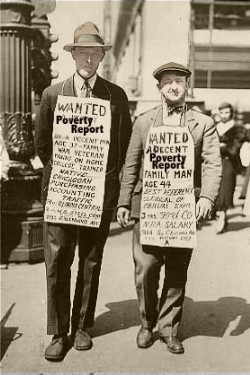
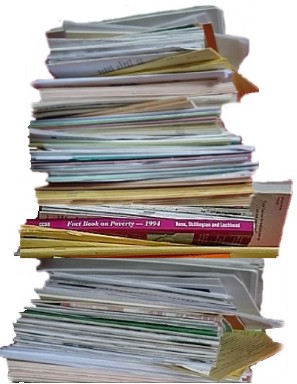
But back to the earthquake. Going up to the top of an old building in an elevator in the middle of an earthquake makes as much sense as responding to the earthquake of poverty by going up to the ivory tower and asking for another poverty report. Since being involved in social justice groups—going on 22 years—I've seen report after report after report after report until one can only wonder if the purpose of poverty reports is to create jobs for poverty report writers.
However, you can't write social policy punditry without committing some hypocrisy and making an exception of yourself to the rules you make up for others. I once did a report on lack of dental care for the income-less in Victoria. I hung out at the Open Door drop-in when it was near Store Street and asked people if I could take close-up photos of their rotten teeth. I vividly remember the generosity of the people who agreed to let me do this, and their comments, which I also wrote in my report.

This was not a paid job, I was an "unemployed" single mom at the time. These photos were blown up and I brought them as part of my report to a public meeting of the Health Board (prior to it becoming a Health Authority). I remember they took the 11x17-sized pictures gingerly in their hands, looked at them briefly, recoiled ever so slightly, and quickly passed them on. Bruce Wallace from VIPIRG then also made his presentation about the lack of dental health in Victoria. Sometime after this the Swift Street Dental Clinic was started.
Then in 2005, I did another report, and was actually paid (below-living, on-contract, no benefits) to do it. After much graying of hair and gnashing of teeth, and too many typos from running out of time, the Women's Economic Justice report was released in April of 2006.

It was one of two federally funded (by Status of Women Canada, before they ditched feminism) projects on guaranteed income. This report was a kind of grassroots think-tank by a wide variety of low-income women examining the benefits, challenges and potential problems of guaranteed livable income. So there is my mea culpa. Now I can get on with my main topic: why we don't need another #@&*# poverty report. What are they good for? In most cases, you know the answer.
But… perhaps I'm wrong. Maybe we will soon see mobs taking to the streets with placards demanding "we need more poverty reports!"
Perhaps instead of women rising up singing "give us bread but give us roses," they will harmonize, "give us pie charts and give us consultations." Perhaps soup kitchens will stop serving soup and will serve flip chart sandwiches instead with magic marker aroma-therapy on the side.
I too have railed against the futility of food charities, with their focus on short-term bandaids over long-term justice.

However at least people are getting some kind of food as a form of (imperfect) harm reduction until we can change the economic system that creates poverty in the first place, but at least it is something practical.
And when one compares the lack of justice in a frontline charity, to the lack of justice in a charity such as the Fraser Institute (registered as a charity with Revenue Canada as a "Community Organization"), there is no comparison.

There are some 500 think tanks in North America and Britain. All of them rely on handouts. $Miiilllllions in Handouts. Each Year. All write reports on poverty, usually blaming the poor for everything, and chastising them mightily for relying on handouts. A few think tanks, attempt to be sympathetic to the poor. They write report after report on poverty too.

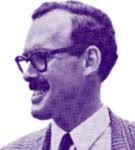
As Robert Theobald wrote way back during the1960s: "To be poor is to have too little money. The immediate need of the poor is for more money. The immediate need is not moral uplift, cultural refinements, extended education, retraining programs or makework jobs, but more money." (Robert Theobald, The Guaranteed Income - Speech given before a leadership conference on the Guaranteed Income, Chicago, May 21, 1966.) Theobald was a socioeconomist on abundance, futurist, activist and author of 20 books. He also wrote: “At a time when the machines can turn out enough production for everybody, it is no longer necessary to force people into factories, or into offices, or into jobs unless they want a beer…"
What would he say about the recent meeting (May 21, 2010) on poverty convened by the *BC Government where the experts consulted said the poor really don't need more money, and the government's main concern was that anyone might think they would do anything about poverty?
However, I have an idea for a perfect new poverty program: pay all the poor people to write reports on the ineffectiveness of poverty reports. It would be sort of like a universal livable income guarantee, but to avoid any whiff of socialism, they could call it: Post-Poverty Deactivation Consultation Rebate.
There would be time for people to set up think tanks in every neighborhood. It would go something like: "Hey Bob, do you think it's going to rain tomorrow?" Or "Hey Glenda, do you think I could have your old long-necked home brew bottles? I'm thinkin' of making a new batch of ginger beer." There'd be a whole lotta thinkin' going on, but it would be a lot more fun than the rancid thoughts produced by current think tanks.

Either this, or we mash up all those poverty reports and turn them into paper maché homes for the homeless—suitable for photo-ops, and then conveniently dissolving in the rain, thus creating an endless need for more poverty reports and bringing an answer to the question: what are they good for?
*Select Child & Youth Standing Committee Meeting on Poverty, May 21
Revenue Canada Charity Listings
http://www.cra-arc.gc.ca/tx/chrts/dnrs/lstngs/menu-eng.html
See also: Free Market Charities (re: Fraser Institute) article
See also: Leaning Tower of Poverty Professionals
Back to Home